


Description
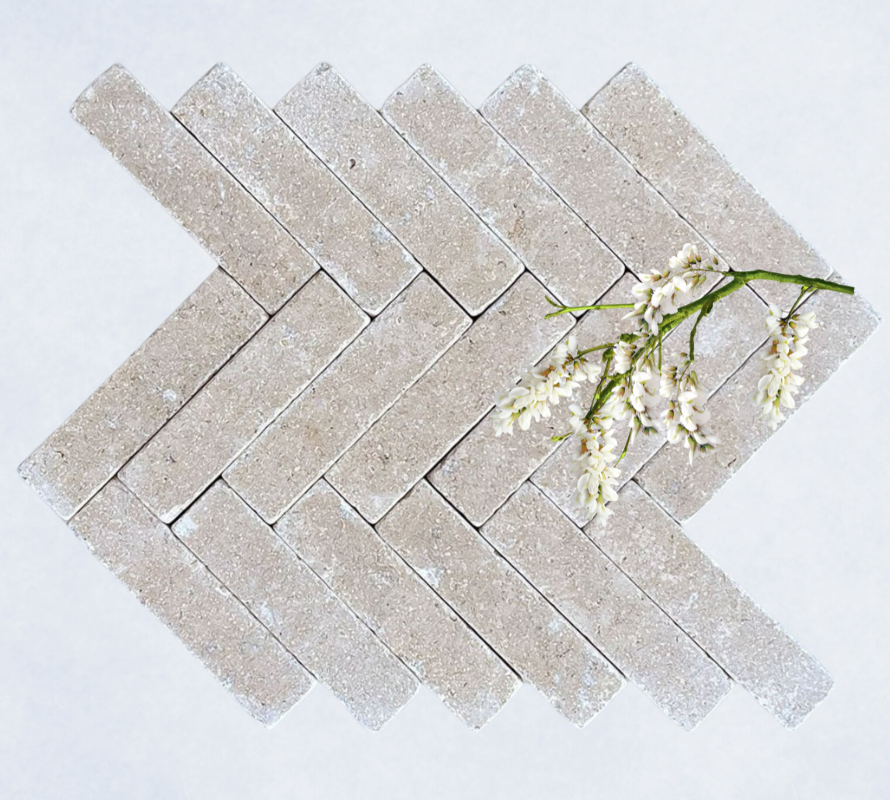
Sinai Pearl Herringbone Cobbles Paving
Why choose Sinai Pearl herringbone cobbles? The herringbone bond is one of the strongest patterns for paving under vehicular load — the interlocking layout distributes forces across the surface, making it an excellent choice for driveways and heavy-traffic areas. Sinai Pearl’s warm beige palette and tumbled/washed finishes give a classy, low-maintenance result that suits period and contemporary homes alike.
Key benefits
- Driveway-ready strength: Our herringbone cobbles are cut and supplied at driveway-grade thicknesses, giving long-lasting performance under cars and daily use.
- Proven laying pattern for vehicles: Herringbone (45° or 90°) is recommended for block/cobble driveways because it creates a fully interlocked surface.
- Natural limestone look: Sinai Pearl offers warm, creamy tones, light fossil detail and gentle tonal variation for a premium natural finish.
- Textured, slip-friendly finish: Washed, tumbled or acid-washed surface options increase texture and initial grip — ideal for UK wet weather.
- Easy repairs & longevity: Individual cobbles are simple to replace if ever needed — a practical benefit for long-term ownership.
Typical product specifications
- Material: Sinai Pearl Egyptian Limestone.
- Typical cobble size: common slim-sett modules such as 200 × 50mm (other sizes available). Thicknesses for driveway use are commonly 40mm
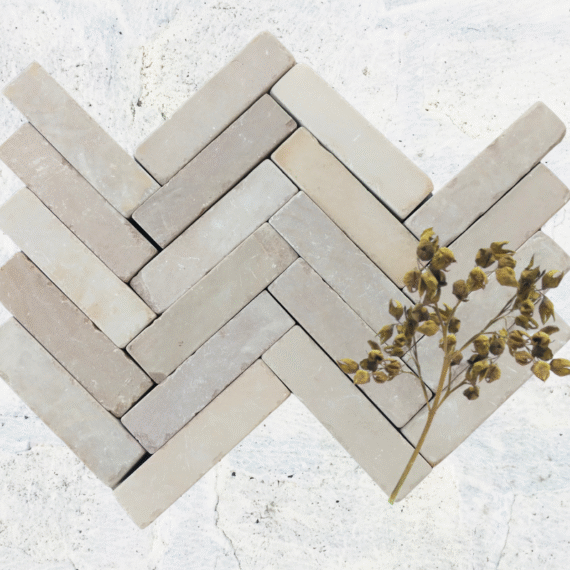
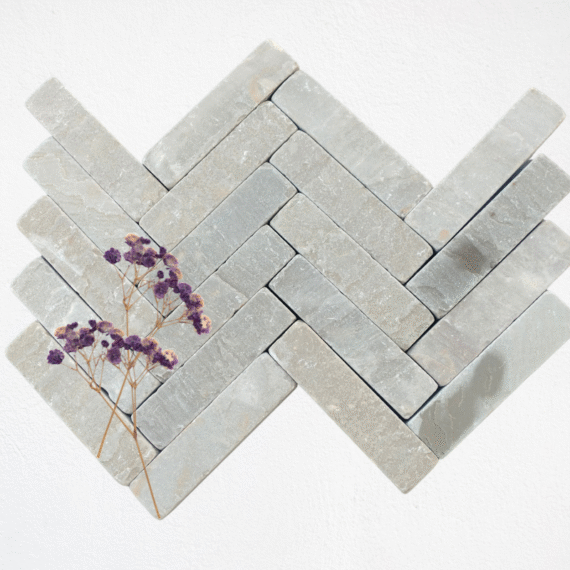
- Finish options: acid-washed, tumbled, honed or brushed — choose texture for aesthetic and slip performance.
- Pack & coverage: supplied in numbered/packed sets for herringbone patterns; packs list m² coverage and weight on the product page.
Where to use Sinai Pearl Herringbone Paving
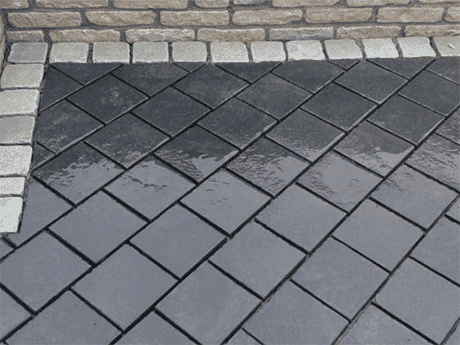
- Driveways & vehicle access — robust when installed to recommended base specifications.
- Front courtyards & entranceways — welcoming, elegant aesthetic that suits period and modern architecture.
- Pathways & terraces — the herringbone pattern gives visual interest and a non-slip texture underfoot.
Installation & technical guidance (buyer-focused answers)
- Sub-base depth: For driveways, you should build a robust, fully compacted base — industry guidance recommends a deeper sub-base than patios (e.g., 150mm+ Type 1 for driveways). Follow local spec and installer recommendations.
- Pattern & laying angle: Herringbone laid at 45° or 90° gives the best interlock under vehicle traffic; kits and packs are often designed to make setting out straightforward.
- Jointing & edging: Use a flexible jointing compound or mortar suitable for natural stone and ensure secure edging restraints to prevent movement under load.
- Professional install vs DIY: Herringbone cobbles can be DIYed by experienced installers; for driveway work, we recommend a qualified landscaper or paving contractor to ensure correct base, falls, and drainage.
Maintenance — keep your herringbone driveway looking great
- Routine cleaning: sweep regularly and wash with a garden hose or pressure washer on a low setting to remove dirt and organic matter.
- Sealing: many Sinai Pearl products are offered pre-sealed; resealing with a breathable stone sealer can help protect against staining (we can advise on product and timing).
- Repairs: replace individual cobbles as required — the modular nature of setts makes local repairs straightforward.
Buyer considerations
- Q: Are herringbone cobbles suitable for driveways?
A: Yes — when laid in a fully interlocked herringbone pattern on a properly constructed base they perform very well under vehicles. - Q: What thickness do I need for driveway cobbles?
A: Driveway setts are commonly 40mm (or thicker) for durability under cars; check the SKU thickness and supplier guidance. - Q: How much waste should I allow?
A: Allow ~5–8% waste for straight runs; 8–12% (or more) if pattern cuts, diagonal laying or complex edges are required. We provide a bespoke estimator with quotes.



Reviews
There are no reviews yet.